


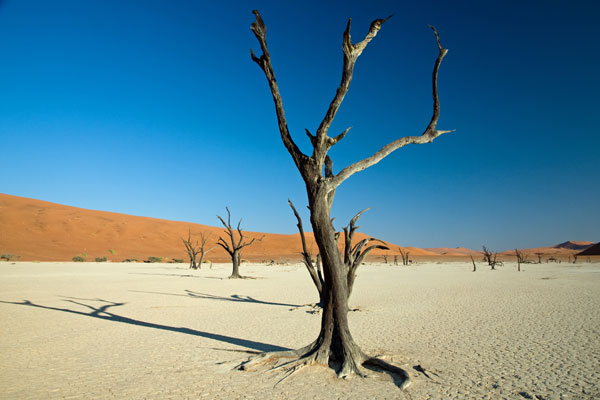
Surreal, still and silent: set in the Namib-Naukluft Park, the Namib Desert is one of the world's largest and oldest deserts. Namib means vast in the Nama language which barely describes this barren, orange landscape. The desert stretches for 1,200 miles down Namibia with an average width of just 70 miles. It is home to the highest sand dunes in the world, their glowing hues created by iron oxidisation and minute fragments of garnet.
With less than 10 millimetres of rain per year, the Namib is as inhospitable as it gets, yet life still thrives. Plants, insects and animals have adapted to this harsh environment in unusual and beautiful ways, the Welwitschia plant with its two strap-shaped leaves just one example. And even humans have settled at Sesriem, close to the famous sand dunes at Sossusvlei. A balloon ride or light aircraft flight is one of the best ways to appreciate this awesome scene.
Top Sights
Sossusvlei Sand Dunes
These striking ochre dunes reach an amazing 300 metres in height. It's definitely worth the 300 kilometre trek from the nearest highway to see these natural wonders and feel the sand between your toes. Visitors need permits to enter the area and will have their vehicle registered on entry and departure.
Swakopmund
A bizarre cultural melting pot, Swakopmund sits next to Africa's rugged Skeleton Coast. The town's European heritage contrasts with the African setting where bohemians, miners, Herero people, artists, game rangers, fisherman, hippies and safari guides live here side by side with travellers looking for adventure.
Walvis Bay
The fishing industry dominates life here, but there are endless outdoor pursuits to enjoy from kiteboarding, surfing, angling and sailing to golf, sandboarding and bird-watching. The Lagoon is one of Southern Africa's most important coastal wetlands, a bird sanctuary estimated to be 3,500 years old which feeds 200,000 birds.
Top